


100 Most Common Korean Adjectives w/ Examples | Beginner and Intermediate Vocabulary Lists

안녕하세요 리더님! Koreanstudyjunkie입니다~
Before we dive in..
When people see “most common” they have a certain expectation. The truth is, “most common” mdoesn’t just refer to 100 or 200 or even 500 words. In most languages, the most common words extend upwards of 1-2000 (and even more than that usually)!
I’m only mentioning this to say that I tried to mix in common words that were not TOO common - if you get what I mean. That way, not just BEGINNERS, but also intermediate learners will see words they haven’t learned yet as well!

크다 = to be big
작다 – to be small
좋다 – to be good
나쁘다 – to be bad
많다 – to be many
적다 – to be few
빠르다 – to be fast
느리다 – to be slow
쉽다 – to be easy
진지하다 – to be serious (attitude)
Example Sentences:
이 카페는 커요.
This café is big.
글씨가 너무 작아요.
The writing is too small.
시간이 너무 적어요.
There isn’t much time.
인터넷이 느려요.
The internet is slow.
와이파이가 빨라요.
The Wi-Fi is fast.
그는 진지한 얼굴로 나를 봤어.
He looked at me with a serious look on his face.
BEFOE YOU GO FORWARD - YOU MAY WANT TO STOP AND LEARN:

어렵다 = to be difficult
덥다 – to be hot (weather)
춥다 – to be cold
예쁘다 – to be pretty
잘생기다 – to be handsome
맛있다 – to be delicious
비슷하다 – to be similar
다르다 – to be different
중요하다 – to be important
필요하다 – to be necessary
Example Sentences:
한국어 발음이 좀 어려워요.
Korean pronunciation is a bit difficult.
그 배우는 정말 잘생겼어요.
That actor is really handsome.
두 가방이 비슷해요.
The two bags are similar.
한국 문화는 좀 달라요.
Korean culture is a bit different.
생각이 달라요.
Our thoughts/opinions are different.
도움이 필요해요?
Do you need help?

편하다 = to be comfortable
불편하다 – to be uncomfortable
복잡하다 – to be complicated
간단하다 – to be simple
자연스럽다 – to be natural
어색하다 – to be awkward
심심하다 – to be bored
지루하다 – to be boring
피곤하다 – to be tired
친절하다 – to be kind
Example Sentences:
이 신발은 정말 편해요.
These shoes are really comfortable.
지금 말하기 불편해요.
It’s uncomfortable to talk right now.
이 문제는 너무 복잡해요.
This problem is too complicated.
지하철이 복잡해요.
The subway is crowded.
분위기가 어색해요.
The atmosphere is awkward.
혼자 있으면 심심해요.
I get bored when I’m alone.
수업이 너무 지루해요.
The class is very boring.
Note: 심심하다 (I am bored) vs 지루하다 (something is boring)

이상하다 = to be strange
까다롭다 – to be picky/demanding
부지런하다 – to be diligent
게으르다 – to be lazy
뿌듯하다 – to feel proud/satisfied
답답하다 – to feel frustrated/stifled
섭섭하다 – to feel disappointed/hurt
억울하다 – to feel wronged/unfairly treated
찝찝하다 – to feel uneasy
싱겁다 – to be bland (also personality nuance)
Example Sentences:
이 냄새 좀 이상해요.
This smell is a bit strange.
입맛이 좀 까다로워요.
I’m a bit picky with food.
그 선생님은 까다로워요.
That teacher is demanding.
오늘은 너무 게을러요.
I’m really lazy today.
목표를 달성해서 뿌듯해요.
I feel proud because I reached my goal.
못 와서 좀 섭섭해요.
I’m a bit sad you couldn’t come.
연락이 없어서 섭섭했어요.
I felt hurt because there was no contact.
진짜 억울해요. 제가 안 했어요.
This is so unfair. I didn’t do it.
오해받아서 억울해요.
I feel wronged because I was misunderstood.
음식이 좀 싱거워요.
The food is a bit bland.

느끼하다 = to be greasy/rich
촉촉하다 – to be moist
푸석푸석하다 – to be dry (texture)
화려하다 – to be flashy
수수하다 – to be modest/plain
성실하다 – to be sincere/diligent
솔직하다 – to be honest
예의 바르다 – to be polite
똑똑하다 – to be smart
멍청하다 – to be stupid
Example Sentences:
너무 느끼해서 많이 못 먹겠어요.
It’s so rich that I can’t eat much.
케이크가 촉촉해요.
The cake is moist.
피부가 촉촉해요.
My skin feels hydrated/moist.
빵이 푸석푸석해요.
The bread is dry.
머리가 푸석푸석해요.
My hair feels dry and brittle.
드레스가 정말 화려해요.
The dress is really flashy.
옷 스타일이 수수해요.
Their clothing style is simple/plain.
화장이 수수해서 좋아요.
I like it because the makeup is natural and simple.
그는 정말 성실해요.
He is very diligent.
솔직하게 말해 주세요.
Please speak honestly.
그는 항상 솔직해요.
He’s always honest.
그 학생은 예의가 바른 편이에요.
That student is quite polite.
예의 바르게 인사했어요.
They greeted politely.
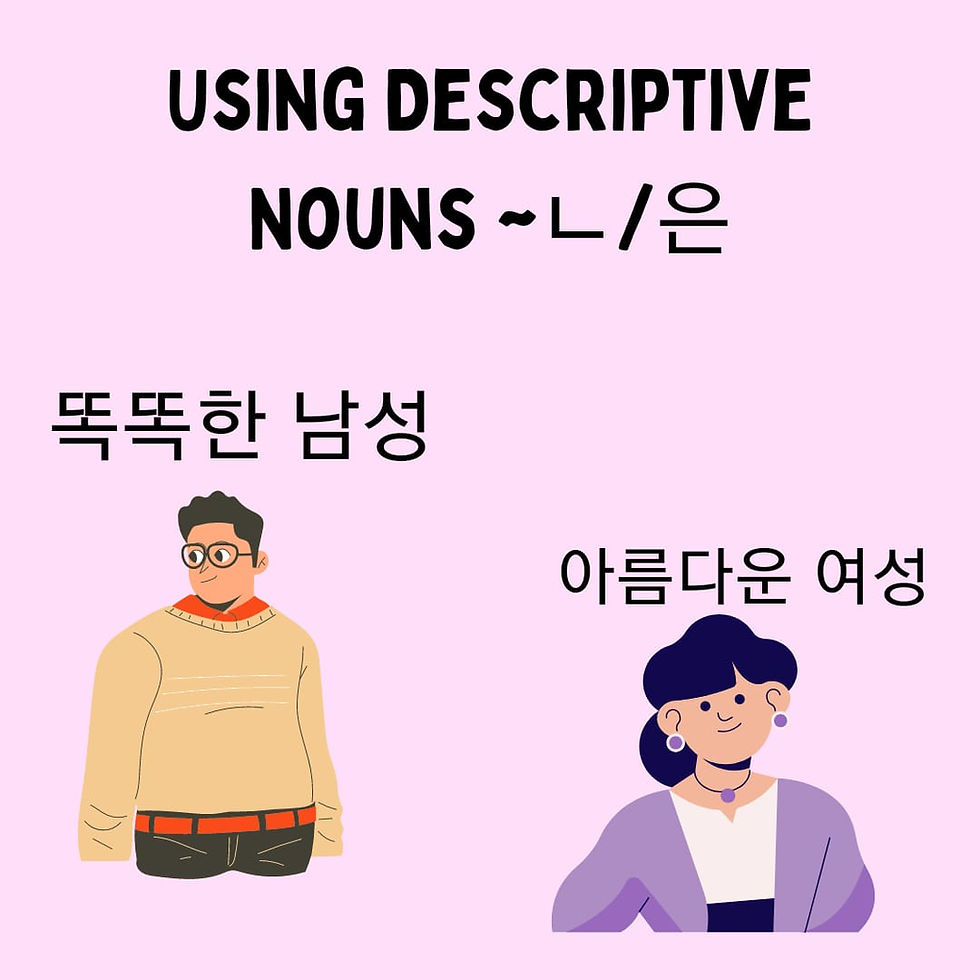
똑똑한 학생이에요.
He/She is a smart student.
그런 질문은 좀 멍청해 보여요.
That question sounds a bit stupid.
멍청한 실수를 했어요.
I made a stupid mistake.

활발하다 = to be lively
소심하다 – to be timid
당당하다 – to be confident
부끄럽다 – to be shy/embarrassed
자랑스럽다 – to be proud
불쌍하다 – to be pitiful
귀엽다 – to be cute
사랑스럽다 – to be lovely
차갑다 – to be cold (personality)
따뜻하다 – to be warm (personality)
Example Sentences:
그 친구는 정말 활발해요.
That friend is really lively.
아이들이 활발하게 놀고 있어요.
The kids are playing energetically.
저는 좀 소심한 편이에요.
I’m kind of timid.
그는 항상 당당해요.
He is always confident.
사람들 앞에서 말하면 부끄러워요.
I feel shy when I speak in front of people.
실수해서 좀 부끄러웠어요.
I was a bit embarrassed because I made a mistake.
가족이 정말 자랑스러워요.
I’m really proud of my family.
그 이야기를 들으니까 불쌍해요.
Hearing that story makes me feel bad for them.
길에 있는 강아지가 불쌍해 보여요.
The dog on the street looks pitiful.
그 아기는 정말 사랑스러워요.
That baby is so lovely.
웃는 모습이 사랑스러워요.
Your smile is lovely.
NOTE: A few of these words may have a “similar” meaning, but it’s all aboutthe nuance
부끄럽다 = internal feeling (I feel embarrassed)
창피하다 = more like “ashamed” in a social/public sense
불쌍하다 = feeling sympathy for someone else
자랑스럽다 = pride toward someone/something

당황스럽다 = to be flustered
긴장되다 – to be nervous/tense
설레다 – to feel excited (fluttery)
만족스럽다 – to be satisfying
불만스럽다 – to be unsatisfying
부담스럽다 – to be burdensome/pressuring
민망하다 – to feel awkward/embarrassed
황당하다 – to be absurd/dumbfounding
허전하다 – to feel empty/lonely
후련하다 – to feel relieved/refreshed
Example Sentences:
갑자기 질문을 받아서 당황스러웠어요.
I was flustered because I got a sudden question.
시험이 있어서 긴장돼요.
I’m nervous because I have a test.
여행 가기 전에 너무 설레요.
I feel so excited before going on a trip.
그 사람을 생각하면 설레요.
I feel butterflies when I think of that person.
너무 비싼 선물은 부담스러워요.
Expensive gifts feel a bit overwhelming.
그 이야기를 듣고 황당했어요.
I was dumbfounded when I heard that story.
결과가 너무 황당해요.
The result is so absurd.
혼자 있으니까 좀 허전해요.
I feel a bit empty being alone.
일이 끝나니까 허전했어요.
I felt a bit empty after it ended.
할 일을 다 해서 후련해요.
I feel relieved after finishing everything.
NOTE:
설레다 ≠ just “excited” (more like butterflies / anticipation)
긴장되다 = physical/mental tension (nerves)
부담스럽다 = emotional pressure, not just “difficult”
허전하다 = quiet, lingering emptiness (very Korean nuance)

가능하다 = to be possible
불가능하다 – to be impossible
확실하다 – to be certain
애매하다 – to be ambiguous
적절하다 – to be appropriate
부적절하다 – to be inappropriate
심각하다 – to be serious
위험하다 – to be dangerous
안전하다 – to be safe
흔하다 – to be common
Example Sentences:
지금 출발하면 도착이 가능해요.
If we leave now, it’s possible to arrive on time.
오늘 안에 끝내는 건 불가능해요.
Finishing it today is impossible.
그 시간에 가는 건 불가능해요.
Going at that time is impossible.
답이 좀 애매해요.
The answer is a bit unclear.
그 표현은 의미가 애매해요.
That expression has a vague meaning.
이 상황에 적절한 말이에요.
That’s an appropriate thing to say in this situation.
옷이 행사에 적절해요.
The outfit is appropriate for the event.
그 행동은 좀 부적절해요.
That behavior is a bit inappropriate.
이런 실수는 흔해요.
This kind of mistake is common.
한국에서는 이런 음식이 흔해요.
This kind of food is common in Korea.
NOTE:
애매하다 = “not clear enough to decide” (very useful in real conversation)
적절하다 / 부적절하다 = social appropriateness, not just correctness

매끄럽다 – to be smooth
거칠다 – to be rough
선명하다 – to be clear/vivid
흐릿하다 – to be blurry
촘촘하다 – to be dense/tight (e.g., spacing)
헐렁하다 – to be loose (clothes)
딱딱하다 – to be hard
부드럽다 – to be soft
반짝이다 – to be shiny/sparkling (verb-like but used descriptively)
촌스럽다 – to be tacky/unsophisticated
Example Sentences:
이 피부가 정말 매끄러워요.
This skin is really smooth.
테이블 표면이 매끄러워요.
The surface of the table is smooth.
손이 거칠어요.
My hands are rough.
사진이 흐릿해요.
The photo is blurry.
글씨가 흐릿해서 안 보여요.
The writing is blurry so I can’t see it.
이 천은 촘촘해요.
This fabric is tightly woven.
글자가 촘촘하게 적혀 있어요.
The letters (not mail) are written closely together.
이 바지가 너무 헐렁해요.
These pants are too loose.
옷이 헐렁해서 불편해요.
The clothes are loose and uncomfortable.
그 옷은 좀 촌스러워요.
That outfit is a bit outdated.
디자인이 촌스러워요.
The design is tacky/outdated.

길다 = to be long
짧다 – to be short (length)
높다 – to be high/tall
낮다 – to be low
무겁다 – to be heavy
가볍다 – to be light (weight)
밝다 – to be bright
어둡다 – to be dark
깨끗하다 – to be clean
더럽다 – to be dirty
Example Sentences
줄이 너무 길어요.
The line is very long.
머리가 길어요.
My hair is long.
시간이 짧아요.
The time is short.
치마가 짧아요.
The skirt is short.
목소리가 낮아요.
The voice is low.
가격이 낮아요.
The price is low.
방이 너무 어두워요.
The room is very dark.
밖이 어두워요.
It’s dark outside.
Tired of boring textbooks? Let’s learn real, natural Korean!
Every week, I create a lesson just for YOU based on what you want + what you need to improve
(No textbooks—everything is fully personalized!)
What you’ll get:
A custom lesson each week (video or PDF + practice)
Focus on ANY skill (speaking, grammar, reading, listening, etc.)
Built-in review so you actually remember what you learn
Detailed corrections + feedback FROM me
It’s flexible, personalized, and designed to actually help you improve— at your own pace ;)
These are great for those who need a bit of structure and/or people who are very busy and don’t have much time to build their own study routine.
The price is about $12 per lesson and the cost is monthly - $48/mo. This cost encompasses the time it takes to create a fully personalized lessons (4-5 per month), built-in practice + review, and corrections + feedback from me.
Email me at: Koreanstudyjunkie@gmail.com if you’re interested in joining or have any other questions.
You Can Pay For Your First Month Here:
That's the end of this post! If you want to learn more useful everyday vocab, check out my 100 Words Picturebook:
Scroll down to see 3 "related" posts I have linked to this one :)


Comments